
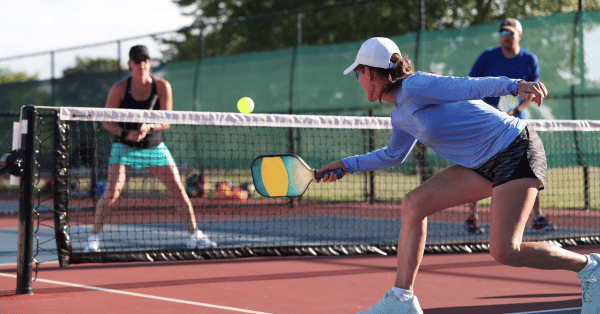
When it comes to sports eyewear, lens tint is about more than color. The right sports tint can help manage brightness, enhance contrast, and make details easier to distinguish, whether the patient is following a golf ball, tracking a serve, reading snowy terrain, or spotting a clay target.
This gives optical professionals a much better conversation starter than, “What color would you like?” Instead, ask:
“What are you trying to see better?”
At IcareLabs, we produce and tint prescription lenses in-house using specialty formulations manufactured by BPI®. This gives practices access to activity-specific colors, with the finished lenses produced and tinted by our team at IcareLabs.
How Do Sports Lens Tints Work?
Different tint colors filter portions of visible light in different ways, which can change how the wearer perceives contrast between an object and its background. That matters when a ball is moving across a colored court, a golfer is looking between the sky and fairway, or a skier is trying to recognize terrain in a bright environment.
There is no single best sports tint for every athlete. The right option depends on:
- The sport or activity
- The playing surface and background colors
- Lighting and weather conditions
- The specific visual task
- The patient’s color perception and comfort
That is why a good sports tint recommendation starts with questions, not a color chart.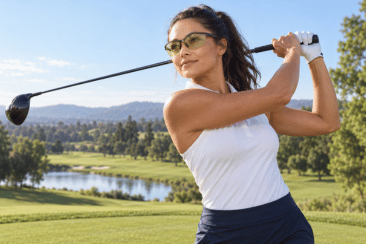
Golf Tints: Follow the Ball or Read the Course
Golf asks the eyes to handle two different jobs: following the ball and reading the course.
Golf Tint: Green-Brown
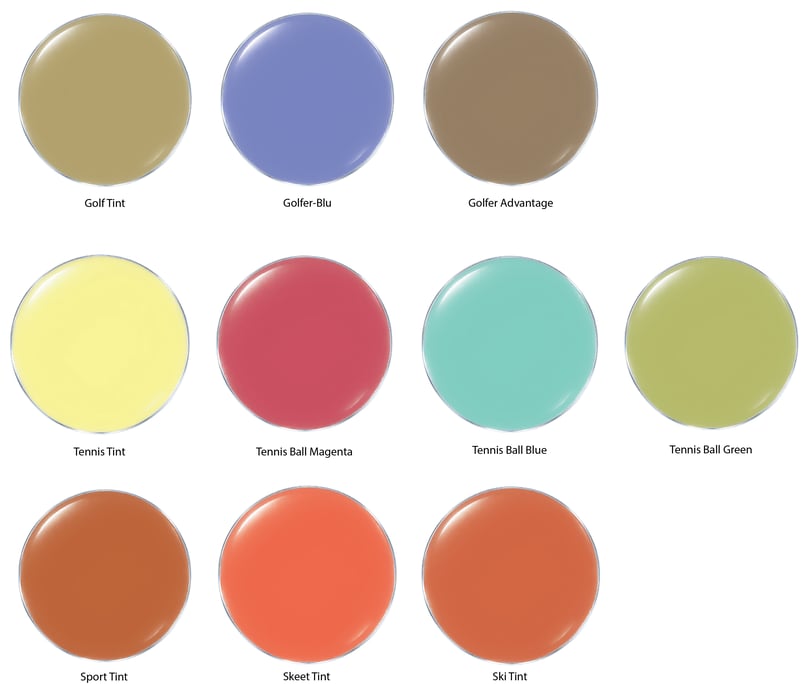
Golf Tint is designed to increase contrast between a golf ball and common backgrounds, including blue sky and green fairways.
Golfer Advantage: Violet-Blue
Golfer Advantage is designed to help distinguish outdoor shades and make fairway and green contours easier to see. This gives opticians two useful conversations: finding the ball and reading the course. Different problems may need different tint solutions.
Tennis and Pickleball Tints: Match the Lens to the Court
Tennis and pickleball move fast, and court colors vary. Before recommending a tint, ask: “What type of court do you usually play on?”
- Tennis Tint: A rich yellow designed to help a yellow ball stand out against blue or blue-gray courts.
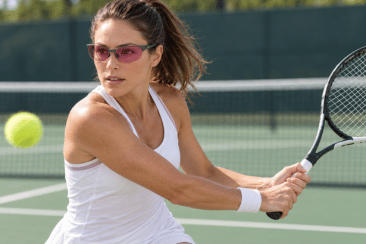
- Tennis Ball Magenta: A violet-magenta tint designed for tracking white or yellow balls against green grass or courts.
- Tennis Ball Blue: A blue tint intended to help white or yellow balls stand out against red clay.
- Tennis Ball Green: A yellow-green tint designed for tracking white or yellow balls against asphalt-gray courts.
The names may sound like a competitive box of crayons, but the strategy is simple: match the tint to the ball and court.
General Sports and Boating: A Versatile Outdoor Tint
Not every patient needs a lens dedicated to one sport. Sport tint has a rich brown color with a greenish-bronze appearance and is designed for contrast during general outdoor activities, including boating and spectator sports. It can be a practical option for patients who want one pair that works across several settings.
For patients who spend significant time around reflective surfaces such as water or roads, also consider whether polarized lenses may be appropriate. Our guide to why polarized lenses are a win for patients and opticals can help continue that conversation.
Shooting Sports: Support Target Recognition
Skeet Tint has a reddish-orange color with a tan flare. It is designed to help the wearer recognize a fast-moving target against changing outdoor backgrounds.
Tint does not replace the need for appropriate lens material, frame selection, and impact protection.
Ski and Snow-Sport Tints: Add Depth and Definition
Snow is extremely bright, yet terrain and shadows can be difficult to distinguish. Ski Tint is a red-brown color designed to support depth perception and terrain definition. Ask whether the patient typically encounters bright sun, overcast skies, flat light, or changing conditions.
Sports Tint Quick-Reference Guide
| Sport or activity | Specialty tint | Color family | Primary visual goal |
|---|---|---|---|
| Golf | Golf Tint | Green-brown | Ball-to-background contrast |
| Golf | Golfer Advantage | Violet-blue | Fairway and green definition |
| Golf | Golfer-Blu | Blue-lilac | Ball visibility |
| Tennis or pickleball | Tennis Tint | Rich yellow | Ball contrast on blue or blue-gray courts |
| Tennis or pickleball | Tennis Ball Magenta | Violet-magenta | Ball contrast against green |
| Tennis or pickleball | Tennis Ball Blue | Blue | Ball contrast against red clay |
| Tennis or pickleball | Tennis Ball Green | Yellow-green | Ball contrast against asphalt-gray courts |
| General sports or boating | Sport Tint | Brown/green-bronze | Versatile outdoor contrast |
| Skeet shooting | Skeet Tint | Reddish-orange/tan | Target recognition |
| Skiing or snow sports | Ski Tint | Red-brown | Depth and terrain definition |
Color descriptions are based on the manufacturer’s published information. Finished lens appearance can vary based on material, tint density, lighting, and screen display.
Turn “What Color?” Into “What Sport?”
Sports lens tints help opticians move the conversation beyond cosmetics. The best recommendation depends on the activity, background, and visual problem.
Try asking:
- What sport or activity do you participate in?

- What does the background or playing surface look like?
- What lighting conditions do you encounter?
- Are you trying to track a ball, recognize a target, see terrain, or control brightness?
Once you understand the visual task, tint becomes part of the solution instead of just another color option.
Sports Tints Produced at IcareLabs
While BPI manufactures the specialty tint formulations in this guide, the finished prescription lenses are produced and tinted by our team at IcareLabs. We can help your practice evaluate lens material, tint, density, and available options based on the patient’s prescription and intended use.
Sports tints also create a natural second-pair opportunity. Everyday glasses may work for work and errands, but not for the golf course, pickleball court, ski slope, or boat. Read more about connecting second-pair recommendations to patient needs.
To explore additional options, visit our custom tinted lenses page or contact your IcareLabs customer service representative.
The best sports lens is not always the one that looks nicest on the sample rack. It is the one selected for the athlete’s actual visual task. Performance gets the final vote, not just the color chip.
