

Vertex distance is one of those optical terms that can be confusing to patients — and even to new opticians — but it plays a critical role in accurate eyewear prescriptions, especially for high-power prescriptions and specialty lenses. In this post, we break down what vertex distance is, how it impacts lens performance, and why taking it seriously benefits patients and practices alike.
What Is Vertex Distance?
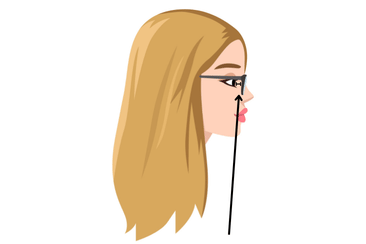
Vertex distance is the distance between the back surface of a spectacle lens and the front surface of the cornea. In simple terms, it’s how far the lens sits from the eye when glasses are worn.
During an eye exam, refractions are typically performed with lenses placed about 12–14 mm from the eye — that’s the standard vertex assumption. However, once a patient chooses frames, the way the frames fit can change that distance — which changes how the lens actually performs in real-world wear.
Why Vertex Distance Matters
It Changes Effective Lens Power:
Even though the labeled prescription power doesn’t change, the optical effect as perceived by the patient's eye does. When a lens sits closer or farther from the eye than the refraction distance, its effective power shifts.
-
Plus lenses: Positioned farther from the eye → perceived power increases.

-
Minus lenses: Positioned farther from the eye→ perceived power decreases.
This shift is subtle for low prescriptions, but becomes clinically significant above ±4.00 diopters — especially in high myopia or hyperopia.
Vertex Distance & Contact Lens Prescriptions
Contacts sit directly on the cornea (zero vertex distance), so contact lens powers must be adjusted from glasses prescriptions when the powers are strong. That’s why you’ll often see different numbers for glasses and contact lenses even for the same patient.
How Opticians Measure Vertex Distance
Accurate measurement of vertex distance ensures that lenses are manufactured to perform as intended. A few common methods include:
-
Distometer: A specialized tool that directly measures the space between lens and cornea.
-
PD ruler: With adjustments for eyelid thickness, you can estimate the distance from the lens back to the eye.
Pro Tip: Ensure glasses are properly adjusted and fit naturally on the patient’s face before measuring — an ill-fitting frame can throw off the measurement and lead to remakes.
Vertex Distance in Lens Ordering
When you’re placing an order, keep in mind that certain higher-end digital PALs — like Varilux FIT designs, Shamir Autograph designs, and our fully compensated Heritage and Legacy G3 designs — are built to take full advantage of these additional measurements. The same applies to single vision work: you’ll want to select one of our digital SV designs to utilize vertex data. Sharing the accurate vertex distance with the lab allows us to properly compensate the lens design so the patient experiences the intended power once the glasses are on their face.
Labs might ask for:
-
Measured vertex distance (in mm)
-
Refraction vertex distance (usually the phoropter distance)
-
Frame style & wrap (to help calculate fit-to-face geometry)
This information helps ensure that effective powered lenses — not just nominal powers — reach the patient.
Patient Comfort & Visual Quality
Incorrect vertex distance can result in:
-
Blurry vision even with accurately surfaced lenses

-
Headaches or eye strain
-
Differences in vision clarity between old lenses and new ones
These issues are often noted by patients with strong prescriptions, where even 1–2 mm differences matter.
Conclusion
Vertex distance may sound like a small measurement, but it has big implications for lens performance, especially in high-power prescriptions and customized lens orders. As an optician, understanding and accurately measuring vertex distance can:
✔ Improve prescription accuracy
✔ Reduce remakes
✔ Enhance patient satisfaction
✔ Provide better visual outcomes
At IcareLabs, we’re committed to helping your practice deliver premium eyewear outcomes — and mastering measurements like vertex distance is one of the keys to success.
